
Air Quality Monitoring Systems in Surat
From the petrochemical units at Hazira to the dyeing mills of Pandesara, Surat’s industries run close to one another and close to the city. An air quality monitoring system in Surat gives each plant a continuous, verifiable record of the gases and dust in the surrounding air, shared live with GPCB, the state regulator, and CPCB.
Nevco Engineers has built environmental monitoring systems for Indian industry since 1982, when it started as a Combustion Analyser Company. Today we supply, commission and maintain the open-path AR 500 (OPSIS) CAAQMS, with over 300 stations installed across India.
In short: Surat plants need a CAAQMS sized to their GPCB consent, configured for the pollutants of their own estate, and connected so that GPCB receives data without manual uploads. Nevco provides the analyser, dust monitor, data logger, installation, and AMC as one package.
Speak with a Nevco engineer: +91-9999946668 | sales@nevcoengineers.com | Get a Quote
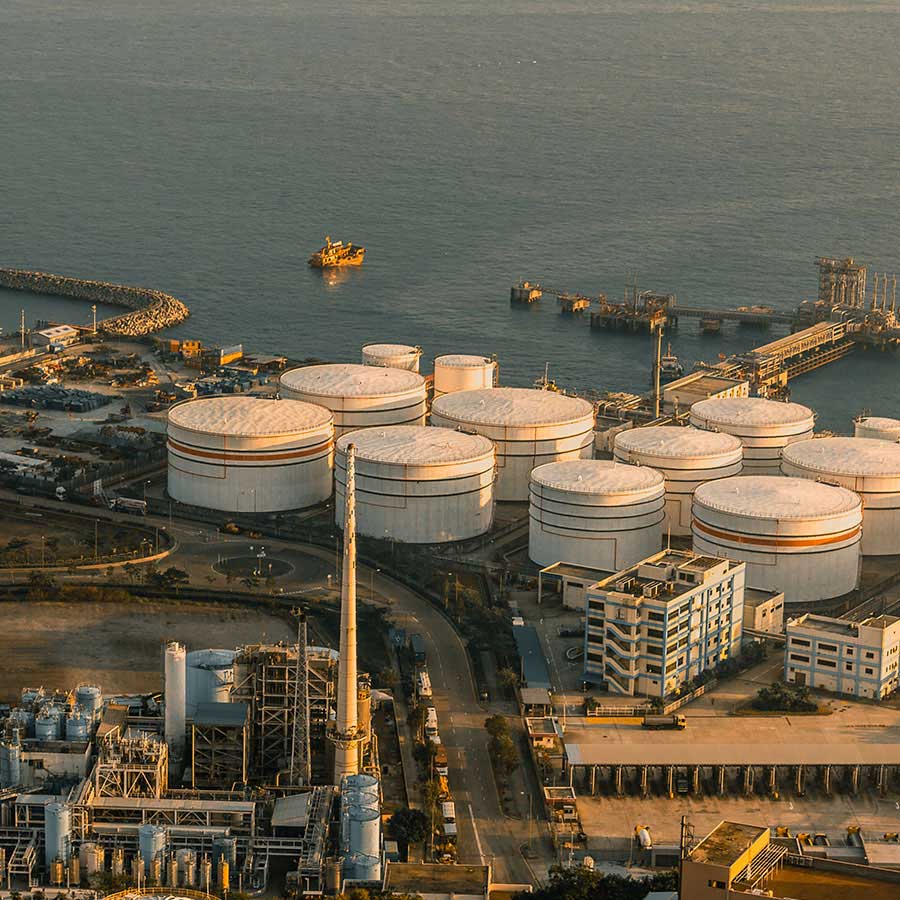
How GPCB Regulates Air Quality in Surat
Gujarat issues a single Consolidated Consent and Authorisation (CC&A) to each industry. For bigger and red category units, the CC&A often includes continuous ambient air monitoring at the plant boundary.
Units in CPCB’s 17 highly polluting categories carry an added duty: their online monitoring must be linked to both the central and state servers.
Surat stands out for one more reason. It is where GPCB launched its emission trading scheme for particulate matter, a market-based programme that runs on continuous stack data. Regulators here are used to working with live numbers, and they expect ambient data to be just as dependable.
CAAQMS in Surat: What to Monitor in Each Cluster
| Cluster | Main Industries | Priority Parameters |
|---|---|---|
| Hazira | Petrochemicals, gas processing, integrated steel, fertilizer, LNG terminal, ports | SO₂, NO₂, CO, NH₃, benzene, PM10, PM2.5 |
| Sachin GIDC | Chemicals, dye intermediates, pharma, textile processing | SO₂, NH₃, HCl, Cl₂, VOCs |
| Pandesara GIDC | Textile dyeing and printing with boilers and thermic fluid heaters | SO₂, NO₂, CO, PM10, PM2.5 |
| Ichchhapore | Mixed industry along the Hazira road, near the port | NO₂, SO₂, O₃, PM |
Your CC&A is the final word on parameters. Many Sachin units, for example, need acid gas monitoring that a Pandesara mill may never require.
Our Global Partners




Nevco Engineers in Numbers
For a Surat plant comparing suppliers, these are the facts behind our name:
| Since | Track Record | Quality |
|---|---|---|
| 1982, founded as Combustion Analysers | 300+ CAAQMS stations in India | ISO 9001:2015 quality management |
| 44 years in environmental instrumentation | 600+ SM 200 dust monitors | ISO/IEC 27001:2013 information security |
| Led by Adarsh Kapur, BITS Pilani gold medallist in Instrumentation Engineering | 10,000+ flue gas analysers and 1,000+ water monitoring stations | Best MSME Award and a CII National Energy Efficiency Circle win as Energy Efficient Technology Provider |
Behind these numbers sit long-standing partnerships with OPSIS, Sintrol, WTW, Xylem, KANE, COMARK, Nova, LSI, SKI and TriOS. Our own engineers handle CPCB and GPCB server integration, and our service centres in major cities keep repair turnaround short. Engineers also train at our global principals’ calibration facilities.
Who Works With Nevco
Gujarat’s energy and chemical majors are among the industries we serve: Reliance, ONGC, GAIL, Essar, Adani, Indian Oil, IFFCO, SRF and Aarti Industries. The wider client base includes NTPC, Tata Power, BHEL, Hindalco, Vedanta, Jindal, NALCO, SAIL, UltraTech, ACC, Aditya Birla Group, Dr. Reddy’s, Hikal, Saint-Gobain, Hindustan Unilever, Maruti, Toyota and Honda.
Regulators trust our systems as well. CPCB, DPCC, TNPCB, PPCB, the MP Pollution Control Board and the Goa State Pollution Control Board are Nevco clients too.
Proof From Gujarat and Beyond
Two of our most relevant monitoring projects for Surat buyers are right here in Gujarat:
- IFFCO, Kandla: OPSIS DOAS/TDL emission monitoring measuring NH₃, NOx and SO₂ at a fertilizer plant, the same gases that matter around Hazira’s fertilizer and process units.
- GAIL (India) Ltd, Gandhar: optical UV-DOAS emission monitoring for a gas processing site, comparable to Hazira’s gas and petrochemical operations.
For ambient monitoring specifically, our three DOAS stations at Emami Paper Mills in Balasore, Odisha have measured SO₂ and NO₂ since January 2013. We also delivered an ambient air quality system to CPCB in Delhi. Both show how open-path technology holds up over many years.
Why Open-Path DOAS Works Well in Surat
The AR 500 (OPSIS) measures gases with DOAS (Differential Optical Absorption Spectroscopy). A light beam travels across an open path, and the analyser reads the absorption signature of each gas along that line.
That approach suits Surat for three practical reasons:
- It reads a path, not a point. Along a long Hazira boundary, one beam covers far more ground than a single sampling inlet.
- It can identify hydrocarbons remotely. This helps petrochemical and refinery neighbours trace VOC sources.
- It handles many gases in one unit. SO₂, NO₂, O₃, benzene, NH₃, HCl, Cl₂, HF and Hg can all be measured by the same analyser.
With no pumps or sample filters, this continuous ambient air quality monitoring system needs only one calibration a year, holds certified span drift to 2% per year, delivers 95% data capture, and has a rated life of up to 25 years. It is also EPA-approved technology.
What a Nevco Station Includes
An air quality monitoring system in Surat from Nevco arrives as one complete package, with a single team responsible from survey to AMC.
| Component or Service | What It Covers |
|---|---|
| AR 500 (OPSIS) analyser | Multi-gas open-path measurement configured to your CC&A |
| SM 200 (OPSIS) | PM10 and PM2.5 ambient dust monitoring by Beta Attenuation, with 600+ units installed in India |
| Weather sensors | Wind speed and direction, temperature, humidity and rainfall |
| NEVCO NV-LX logger | CPCB protocol data logging over RS-485 Modbus, analog inputs, Ethernet and 4G |
| Shelter | Air-conditioned enclosure protected against coastal humidity |
| Survey and siting | Station location planned around your sources and Surat’s sea breeze |
| Commissioning | Installation, calibration and testing before go-live |
| Server integration | Live data link to GPCB and CPCB, handled by our engineers |
| Training and AMC | Team training, plus calibration, preventive maintenance and breakdown support |
A note on weather data: Coastal winds over Hazira and the Tapi estuary change direction through the day. The station’s wind sensors help show whether a reading points to your plant or the one across the road.
What Your Ambient Air Quality Monitoring Station in Surat Reports
Once the station is live, your environment team gets far more than raw numbers:
- Hourly averages for every gas and for PM10 and PM2.5
- 24-hour and 8-hour averages, ready to compare with NAAQS 2009 limits
- Wind-linked readings, showing which directions brought the highest concentrations
- Automatic reports from the AR 500 for GPCB returns and internal reviews
For a Hazira plant, this means a sudden SO₂ rise can be checked against wind direction within minutes. If the air came from the sea, the plant has a strong case that the source lies elsewhere. If it came across the plant, operators can check process units straight away.
Request Your Surat Station Proposal
Getting started on an air quality monitoring system in Surat takes three steps:
- Send your CC&A and plant location to our team.
- Receive a recommended configuration based on your parameters, layout, and wind pattern.
- Get an itemised quote for equipment, installation, GPCB connectivity, and AMC.
- +91-9999946668
- sales@nevcoengineers.com
We are open from Monday to Saturday 10:00 AM - 06:00 PM
Frequently Asked Questions.
Have questions about our systems, compliance requirements, or service offerings? We’ve answered the most common ones here.
Where can I see the live AQI for Surat?
Surat’s live AQI appears on the Sameer mobile app and CPCB’s national air quality portal, which draw on government stations in the city. These give an area-wide picture. Industries in Hazira or Sachin use their own CAAQMS to see what is happening right at their fence line.
Who regulates air pollution in Surat?
The Gujarat Pollution Control Board (GPCB) regulates air pollution in Surat through its regional office and the CC&A it issues to each industry. CPCB sets national standards and receives online monitoring data from highly polluting units.
How much does a CAAQMS cost for a Surat plant?
Pricing depends on the number of gases, whether acid gases like HCl and Cl₂ are needed, particulate monitoring, the shelter and the AMC term. A Sachin chemical unit and a Pandesara textile mill can need very different setups. Send your CC&A for an itemised quote.
Does Nevco supply OPSIS systems in Gujarat?
Yes. Nevco works with OPSIS as a global technology partner and has delivered OPSIS monitoring systems in Gujarat, including emission monitoring at IFFCO Kandla. We supply the AR 500 CAAQMS to industries across Surat.
What does a Nevco CAAQMS package include?
A typical package covers the AR 500 gas analyser, SM 200 dust monitor, weather sensors, NV-LX data logger, shelter, site survey, installation, GPCB and CPCB connectivity, training, and AMC.
How often must ambient air be monitored as per CPCB?
Under NAAQS 2009, manual monitoring means at least 104 measurements a year, taken twice a week for 24 hours. A continuous station records every hour without a break, which is why GPCB increasingly asks larger units for CAAQMS.
Does Surat's emission trading scheme cover ambient air monitoring?
The scheme is built on continuous stack monitoring of particulate matter. Ambient stations sit outside it, but GPCB consents can still require them separately.
Which gases should a station near Hazira measure?
SO₂, NO₂, CO, NH₃ and benzene are typical for the Hazira belt, together with PM10 and PM2.5.
Do textile mills in Pandesara need a CAAQMS?
It depends on the unit’s size and CC&A conditions. Larger mills with coal or lignite boilers are more likely to have ambient monitoring written into their consent.
Do you supply CAAQMS in Sachin GIDC and Ichchhapore?
Yes. Our engineers take on on-site projects in Hazira, Sachin GIDC, Pandesara GIDC, Ichchhapore, and the wider Surat district, with AMC support after commissioning.