
Air Quality Monitoring Systems in Visakhapatnam
Vizag is a city of steel, oil, pharma, and power, wrapped around one of India’s busiest ports and ringed by hills. That mix of heavy industry and tricky geography makes every boundary reading count. An air quality monitoring system in Visakhapatnam records gases and dust around an industrial site every hour. It keeps a defensible record and sends live data to the Andhra Pradesh Pollution Control Board (APPCB) and CPCB.
Nevco Engineers handles the full job here, from siting and commissioning to AMC, built around the AR 500 (OPSIS) open-path analyser. More than 300 of these stations are working across India, backed by 44 years of Nevco experience.
In short: A Vizag CAAQMS should be sited with the city’s hills and sea breeze in mind, cover the gases your APPCB consent names, and show sudden spikes fast enough for your team to act. Nevco plans, installs, and maintains the complete station.
Call our engineers: +91-9999946668 | sales@nevcoengineers.com | Request a Quote
Why Vizag's Geography Makes Monitoring Harder
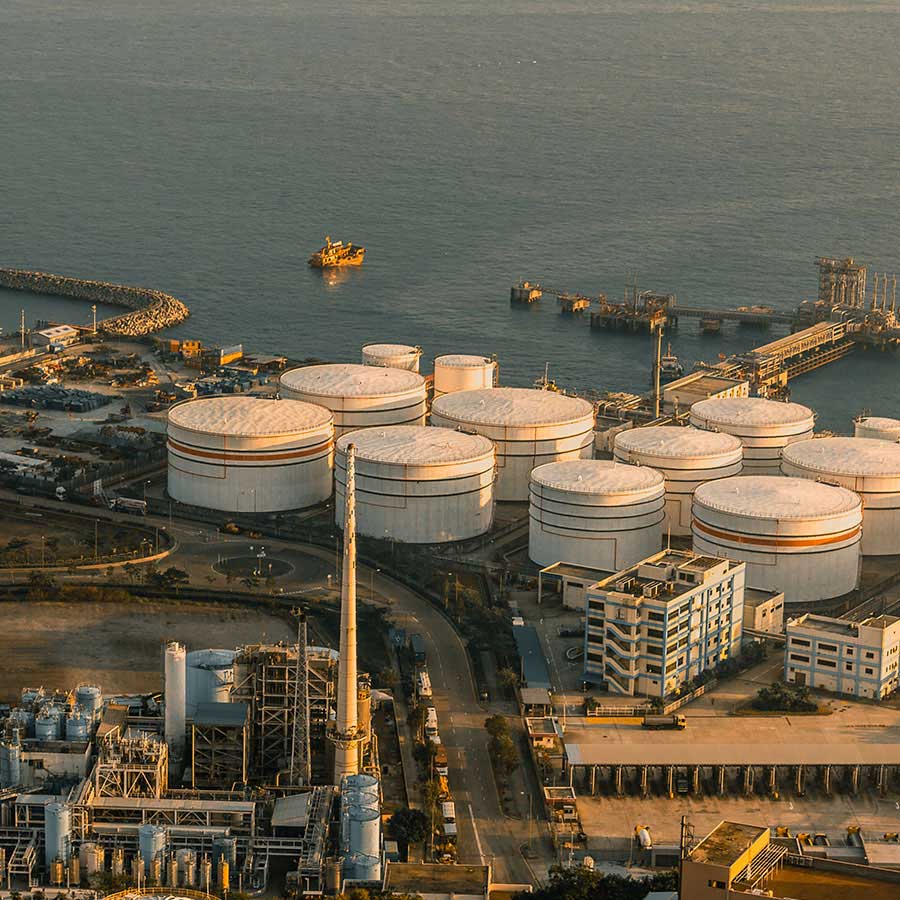
Visakhapatnam sits in a natural bowl. The Eastern Ghats hills curve around the city on three sides, and the Bay of Bengal closes the fourth. On calm days, especially in winter, emissions from the industrial belt and the port can stay trapped inside this bowl instead of dispersing.
The wind also changes through the day. Sea breezes push air inland in the afternoon, and land breezes carry it back toward the coast at night. The same plume can pass over a station twice in 24 hours.
For plants here, this means:
- Siting matters more than usual. A station placed in a sheltered pocket can read very differently from one on open ground a short distance away.
- Hourly data beats daily averages. Trapped pollution builds up over hours, so short peaks tell the real story.
- Wind records are essential. They are often the only way to show which source a reading came from.
APPCB Consent Rules in Andhra Pradesh
APPCB issues a Consent for Establishment (CFE) before a plant is built and a Consent for Operation (CFO) to run it. Steel, refinery, power, pharma and other red category units usually find continuous ambient monitoring among their CFO conditions. Large projects often have it in their Environmental Clearance as well.
Industries in CPCB’s 17 highly polluting categories must also provide online connectivity to the state and central servers. Readings are judged against NAAQS 2009.
Vizag’s industrial history adds weight to all of this. The 2020 styrene vapour leak at a polymer plant near RR Venkatapuram brought the city’s industrial safety and air quality into national focus. Regulators and residents alike now expect continuous, transparent data.
CAAQMS in Visakhapatnam: Monitoring Profiles by Zone
| Zone | What Operates There | What to Watch | Why It Matters |
|---|---|---|---|
| Vizag Steel Plant zone | Integrated steelmaking, coke ovens, sinter plant, blast furnaces | SO₂, NO₂, CO, benzene, PM10, PM2.5 | Coke ovens and sinter lines release both gases and fine dust |
| Visakh Refinery | Crude refining and fuel storage | Benzene and hydrocarbons, SO₂, NO₂, CO | The refinery sits close to dense residential areas |
| Parawada Pharma City | Bulk drugs, APIs and intermediates | NH₃, HCl, Cl₂, VOCs, SO₂ | Solvent and process emissions vary widely by product |
| Atchutapuram SEZ | Apparel, engineering and mixed manufacturing | NO₂, SO₂, CO, PM | Boilers and logistics traffic in a fast-growing area |
| Simhadri | Coal-based thermal power generation | SO₂, NO₂, PM10, PM2.5, Hg | Large coal burning sources with tall stacks |
The port area adds another layer across many of these zones. Coal and iron ore handling at Visakhapatnam Port has long raised public concern about dust, so particulate monitoring is relevant even for units that do not handle bulk cargo themselves.
The Nevco Story: From Combustion Analysers to 300+ CAAQMS Stations
Nevco Engineers began in 1982 as Combustion Analysers, supplying instruments that helped Indian plants measure what came out of their boilers. Under the leadership of Adarsh Kapur, a BITS Pilani gold medallist in Instrumentation Engineering, the company grew into a full environmental monitoring specialist.
Over 44 years, that work has added up to more than 10,000 flue gas analysers, 300+ CAAQMS stations, 600+ SM 200 dust monitors and 1,000+ water monitoring stations installed across India. Along the way, Nevco built long partnerships with OPSIS, Sintrol, WTW, Xylem, KANE, COMARK, Nova, LSI, SKI and TriOS.
Today the company holds ISO 9001:2015 and ISO/IEC 27001:2013 certification. It has also earned a Best MSME Award and a win in the Energy Efficient Technology Provider category at the CII National Energy Efficiency Circle Competition. Its engineers integrate stations with CPCB and SPCB servers in-house and train at the calibration facilities of Nevco’s global principals. Service centres in major cities support plants after commissioning.
Who Relies on Nevco in Steel, Oil and Power
Several companies running large plants in the Visakhapatnam region are among Nevco’s clients, including HP, NTPC, Andhra Petrochemicals, Dr. Reddy’s and Essar.
The wider list covers steel and metals (SAIL, Jindal, Hindalco, Vedanta, NALCO), oil and gas (Indian Oil, Reliance, ONGC, GAIL), power (Tata Power, BHEL, Adani) and chemicals (SRF, Aarti Industries, Hikal). Regulators such as CPCB, DPCC, TNPCB and PPCB are clients too.
East Coast Projects That Show How Nevco Works
Several of Nevco’s monitoring projects sit on India’s east coast, in conditions much like Vizag’s:
Emami Paper Mills, Balasore, Odisha
Three ambient stations measuring SO₂ and NO₂ by DOAS, the same method as the AR 500, in service since January 2013. What it shows: open-path stations keep working in a humid coastal climate for more than a decade.
NALCO, Angul, Odisha
Stack monitoring at a 10 × 120 MW captive power station totalling 1,200 MW. What it shows: experience with large coal-fired units like those at Simhadri.
Tata Steel Long Products, Joda, Odisha
Three online SO₂ analyser systems (System 400) with a remote calibration facility. What it shows: steel sector know-how relevant to the Vizag Steel Plant zone.
Catching Sudden Spikes, Not Just Daily Averages
Compliance limits are written as 24-hour, 8-hour or annual averages. But the moments that matter most to a plant and its neighbours are often short and sharp: a process upset, a valve failure or a flare event.
A continuous station helps your team respond to these moments:
Hourly visibility
A rising gas shows up in the hourly data well before it affects the daily average.
Wind-linked readings
Each spike is stored with wind speed and direction, so the team knows at once where to look.
A clean timeline
Continuous records show when an event began, how high it went and when air returned to normal.
A CAAQMS is not a substitute for dedicated leak detectors inside process areas. It does give the plant an independent view of what reached the boundary, and that record matters during any later inquiry
Why Mumbai Industries Choose Nevco Engineers
Our Global Partners






Nevco’s clients include Reliance, Tata Power, Indian Oil, HP, ONGC, GAIL, NTPC, BHEL, Adani, Essar, Hindalco, Vedanta, Jindal, NALCO, SAIL, IFFCO, UltraTech, ACC, Aditya Birla Group, Aarti Industries, Hikal, SRF, Dr. Reddy’s, Hindustan Unilever, Saint-Gobain, Maruti, Toyota, Honda, MRF, Goodyear and Wipro.
Pollution control authorities rely on Nevco too: CPCB, DPCC, TNPCB, PPCB, the MP Pollution Control Board and the Goa State Pollution Control Board are among our clients as well.
AR 500 (OPSIS) for an Ambient Air Quality Monitoring Station in Visakhapatnam
The AR 500 uses DOAS to read gases along an open light path. In Vizag, that brings practical benefits:
- Wide coverage along long boundaries. Steel and refinery sites are large, and a path reading covers more ground than a single inlet.
- Many gases from one analyser. A single unit covers sulphur and nitrogen oxides, ozone, carbon monoxide, ammonia, benzene, acid gases like HCl and HF, chlorine and mercury.
- Steady performance in salty, humid air. With no pumps or sample filters, there are fewer parts for coastal air to corrode.
- Low upkeep. One calibration a year, 95% data capture and up to 25 years of service life.
For an air quality monitoring system in Visakhapatnam, these traits make the AR 500 a strong fit as a continuous ambient air quality monitoring system for Vizag’s large industrial sites. Around ore yards and coal stockpiles, an SM 200 (OPSIS) unit adds Beta Attenuation ambient dust monitoring for PM10 and PM2.5. The NEVCO NV-LX logger, built to the CPCB protocol, provides IoT connectivity to APPCB and CPCB over Ethernet or 4G.
Each station also includes weather sensors, an air-conditioned shelter, site survey, installation, commissioning, staff training and AMC.
Picking an AQMS Supplier in Visakhapatnam
Vizag’s terrain makes siting the first test for any AQMS supplier in Visakhapatnam. Here are the questions worth asking, with Nevco’s answers:
Will you use wind and terrain data before fixing a location? Yes. Each proposal starts on site, plotting your emission sources against Vizag’s wind and terrain before a location is chosen.
Have your stations run through a coastal monsoon? Yes. Our DOAS stations at Emami Paper Mills in coastal Odisha have operated since 2013.
Who links the station to APPCB? Our engineers handle CPCB and SPCB server integration directly.
Can an engineer reach Parawada or the steel zone when needed? Our AMC covers calibration, maintenance and breakdowns, supported by service centres in major cities.
Start Your Vizag Station Plan
Getting an air quality monitoring system in Visakhapatnam planned takes three steps:
- Send your APPCB consent and site location.
- We suggest a station layout that accounts for local winds, terrain, and your parameter list.
- You receive an itemised quote for equipment, installation, APPCB connectivity, and AMC.
- +91-9999946668
- sales@nevcoengineers.com
We are open from Monday to Saturday 10:00 AM - 06:00 PM
Frequently Asked Questions.
Have questions about our systems, compliance requirements, or service offerings? We’ve answered the most common ones here.
Is the air quality in Visakhapatnam good or bad?
It changes with the season. Air is usually cleaner during the monsoon, when rain and strong winds clear pollutants. It tends to worsen in winter, when calm conditions trap emissions in the city’s hill-ringed bowl. Live AQI is available on CPCB’s Sameer app.
Why does Visakhapatnam have air pollution problems?
The city combines heavy industry, a large bulk cargo port and dense traffic in a basin surrounded by hills. Steel, refining, power and pharma emissions, plus ore and coal dust, can build up when winds are weak.
What is the cost of an air quality monitoring station in Vizag?
It depends on the gases in your APPCB consent, particulate monitoring, the shelter, coastal corrosion protection and the AMC term. A steel plant boundary and a pharma unit in Parawada need very different setups. Share your CFO for a detailed quote.
Does Nevco work with steel and power plants?
Yes. Nevco’s clients include SAIL, Jindal, Essar, NTPC, Tata Power and NALCO. Its projects include SO₂ monitoring at Tata Steel Long Products in Joda and environmental monitoring for NALCO’s 1,200 MW captive power plant.
What does a Nevco CAAQMS AMC cover?
A Nevco AMC covers annual calibration, preventive maintenance and breakdown support for the analyser, dust monitor, weather sensors and data logger, backed by service centres in major cities.
What happens if CAAQMS readings exceed NAAQS limits?
Repeated exceedances can lead to APPCB notices, inspections or directions to improve controls. Continuous data with wind records helps a plant show whether the exceedance came from its own operations or another source.
Can a CAAQMS detect a chemical gas leak?
It can show a sudden rise in any gas it measures at the boundary within the hour. It works alongside, not instead of, dedicated leak detection systems inside process areas.
Does Parawada Pharma City need ambient air monitoring?
Many units there have ambient monitoring in their CFO or Environmental Clearance. Typical parameters include NH₃, HCl, Cl₂, VOCs and SO₂, depending on the products made.
What is APPCB's role in air quality monitoring?
The Andhra Pradesh Pollution Control Board grants consents, sets monitoring conditions for each industry and receives online data from monitored units. It also runs its own city monitoring stations with CPCB.
Do you install CAAQMS in Atchutapuram and Simhadri?
Yes. Our engineers handle station projects in Atchutapuram SEZ, the Simhadri power belt, Parawada, the steel plant zone, the refinery area and across Visakhapatnam district.