
Air Quality Monitoring Systems in Raipur
Raipur is the trading and processing hub of central India’s steel and cement country. Sponge iron kilns, rolling mills, ferro alloy furnaces and cement plants ring the city, and most of them run on coal. Much of the region’s pollution is dust: from kilns, from raw material yards and from the trucks that link them. An air quality monitoring system in Raipur tracks that dust and the gases that come with it, hour after hour, at the plant boundary. It also passes the data in real time to the Chhattisgarh Environment Conservation Board (CECB) and CPCB.
For this work, Nevco Engineers brings the AR 500 (OPSIS) gas analyser (in service at more than 300 Indian sites), paired dust monitors, installation and long-term maintenance, drawing on 44 years in industrial instrumentation.
In short: For Raipur plants, particulate monitoring is as important as gas monitoring, the station must stay reliable through extreme summer heat, and the setup should follow your CECB consent and any Environmental Clearance conditions. Nevco covers dust and gases, from the stack to the boundary.
Get in touch: +91-9999946668 | sales@nevcoengineers.com | Request a Quote
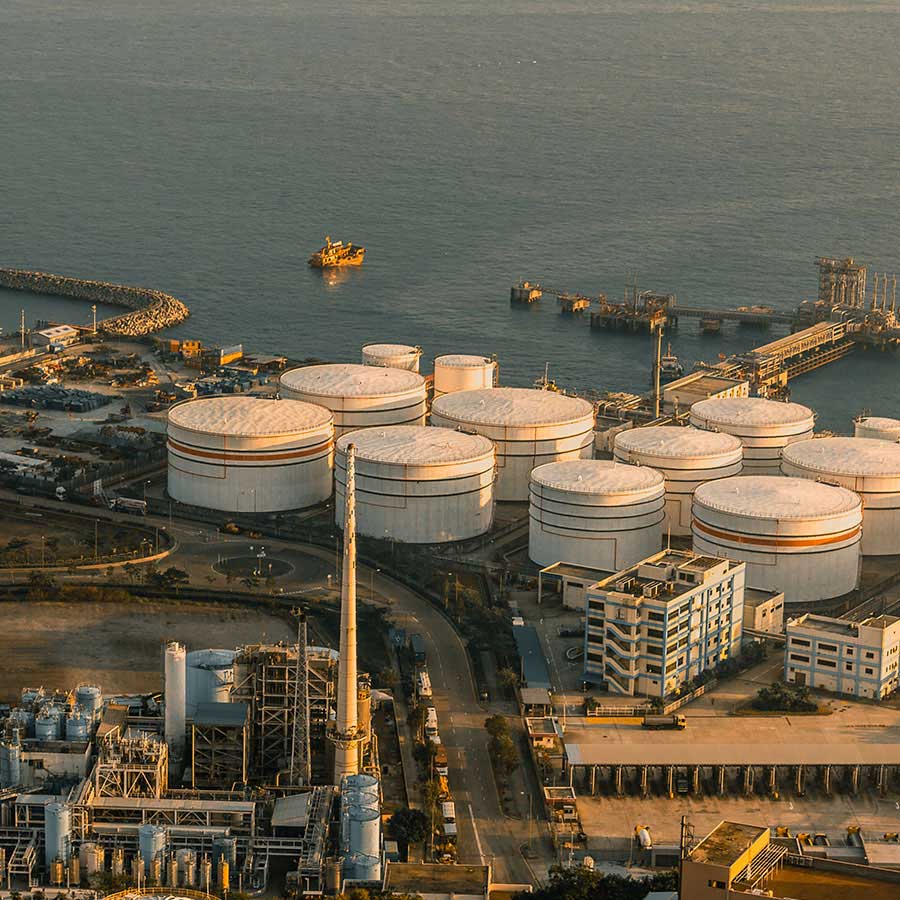
How CECB Regulates Air in Chhattisgarh
In Chhattisgarh, the Chhattisgarh Environment Conservation Board (CECB) acts as the state pollution control board. Every industry needs its Consent to Establish before construction and its Consent to Operate before production, both granted by CECB under the Air Act.
Steel, sponge iron, ferro alloy, power and cement plants are red category units. Their consents often require continuous ambient monitoring at the boundary. Larger plants and mining leases usually have it written into their Environmental Clearance as well, sometimes with more than one station. Plants in CPCB’s list of 17 highly polluting sectors need online links to both the CECB and CPCB servers.
Raipur also falls under the National Clean Air Programme (NCAP) as a city that has not met national air quality standards. That keeps steady attention on the industrial areas around it.
CAAQMS in Raipur: What to Monitor, Cluster by Cluster
Instead of listing each area separately, this matrix shows which parameters typically matter in each Raipur cluster.
| Parameter | Siltara | Urla | Borai | Bhanpuri | Baloda Bazar Cement Belt |
|---|---|---|---|---|---|
| PM10 | Yes | Yes | Yes | Yes | Yes |
| PM2.5 | Yes | Yes | Yes | Yes | Yes |
| SO₂ | Yes | Yes | Yes | Often | Yes |
| NO₂ | Yes | Yes | Yes | Yes | Yes |
| CO | Yes | Yes | Often | Often | Often |
| Benzene / VOCs | Often | Often | Rarely | Rarely | Rarely |
| Hg | Rarely | Rarely | Rarely | Rarely | Often |
What runs in each cluster:
- Siltara: the largest growth centre near Raipur, with sponge iron, steel melting, ferro alloys, rolling and captive power plants
- Urla: an older estate packed with rolling mills, foundries, sponge iron and engineering units close to residential areas
- Borai: an industrial growth centre in Durg district with steel processing and agro-based units
- Bhanpuri: a smaller mixed estate with light engineering, fabrication and processing units
- Baloda Bazar: a major cement belt with large integrated plants, limestone mining and captive power
The Hg row reflects that cement kilns and coal burning can release mercury, which some consents now ask plants to track.
Stack Dust vs Fugitive Dust
Raipur’s industries face two kinds of dust, and a good monitoring plan treats them differently.
Stack dust leaves through chimneys after passing through ESPs or bag filters. Stack monitors inside the chimney measure it.
Fugitive dust escapes from everywhere else: coal and ore yards, conveyor transfer points, kiln discharge, crushers, limestone quarries and unpaved roads. It does not pass through any chimney, so only ambient monitoring at the boundary can capture its effect.
In Siltara, Urla and the cement belt, fugitive dust often has a bigger effect on nearby villages than stack emissions do. A boundary station that records PM10 and PM2.5 alongside wind data shows plant managers which yards or roads are driving the readings. It also shows whether water sprinkling, wind barriers or covered conveyors are actually working.
In the steel and cement belt, capturing that picture is the main task of an ambient air quality monitoring station in Raipur. The particulate side is handled by the SM 200 (OPSIS), a Beta Attenuation monitor built for ambient dust monitoring of PM10 and PM2.5, with 600+ units running in India.
One Supplier From Stack to Boundary
Most Raipur plants need more than an air quality monitoring system in Raipur at the fence line. Nevco covers the full dust and emission picture, so a single team handles all of it:
| Where the Dust Is | What Nevco Supplies |
|---|---|
| Plant boundary | AR 500 (OPSIS) gas analyser and SM 200 (OPSIS) dust monitor |
| Chimneys after ESPs and bag filters | Stack dust monitoring systems such as the DSL-340 MKIII cross-stack opacity monitor and Sintrol S300 triboelectric dust monitors |
| Bag filter houses | Sintrol bag filter leak detectors that flag failing bags early |
| Stack gases | CEMS for SO₂, NOx and other gases, including the OPSIS AR 602Z and System 400 |
| Data to regulators | NEVCO NV-LX logger with CPCB protocol IoT connectivity to CECB and CPCB |
One supplier also means one AMC, one service contact and one data system across every monitoring point in the plant.
Nevco by the Numbers
- 1982: founded as Combustion Analysers
- 44 years in environmental monitoring and industrial instrumentation
- 300+ CAAQMS stations installed in India
- 600+ SM 200 dust monitors in service
- 10,000+ flue gas analysers supplied
- 1,000+ water monitoring stations installed
- 2 ISO certifications: ISO 9001:2015 and ISO/IEC 27001:2013
- 2 industry honours: Best MSME Award, and the Energy Efficient Technology Provider win at the CII National Energy Efficiency Circle Competition
- 10 global technology partners: OPSIS, Sintrol, WTW, Xylem, KANE, COMARK, Nova, LSI, SKI and TriOS
Nevco is led by Adarsh Kapur, a BITS Pilani gold medallist in Instrumentation Engineering. Our engineers carry out CPCB and SPCB server integration in-house and train at our principals’ calibration facilities. Service centres in major cities keep repair turnaround short.
Steel, Power and Cement Leaders Among Our Clients
Companies with a large footprint in Chhattisgarh are on Nevco’s client list, including SAIL, NTPC, Jindal, Vedanta, UltraTech and ACC. Other clients include Tata Power, Hindalco, NALCO, Aditya Birla Group, Adani, Essar, BHEL, Indian Oil, Reliance and IFFCO, along with regulators CPCB, DPCC and the MP Pollution Control Board.
Our Global Partners




Nevco’s clients include Reliance, Tata Power, Indian Oil, HP, ONGC, GAIL, NTPC, BHEL, Adani, Essar, Hindalco, Vedanta, Jindal, NALCO, SAIL, IFFCO, UltraTech, ACC, Aditya Birla Group, Aarti Industries, Hikal, SRF, Dr. Reddy’s, Hindustan Unilever, Saint-Gobain, Maruti, Toyota, Honda, MRF, Goodyear and Wipro.
Pollution control authorities rely on Nevco too: CPCB, DPCC, TNPCB, PPCB, the MP Pollution Control Board and the Goa State Pollution Control Board are among our clients as well.
Projects That Match Raipur's Industries
These environmental monitoring projects line up closely with the industries around Raipur:
| Raipur Industry | Matching Nevco Project |
|---|---|
| Sponge iron in Siltara and Urla | Tata Steel Long Products (formerly Tata Sponge Iron), Joda: three online SO₂ analyser systems with remote calibration |
| Cement in Baloda Bazar | Birla Corporation: emission monitoring for PM, SOx and NOx, plus effluent monitoring |
| Captive power across the region | NALCO, Angul: monitoring for a 1,200 MW captive power plant’s boiler stacks |
| Long-running ambient stations | Emami Paper Mills, Balasore: three DOAS ambient stations in service since January 2013 |
Keeping a Station Running in Raipur's Summer Heat
Summer temperatures in Raipur can climb past 45°C, and hot winds carry fine dust everywhere. These conditions are tough on monitoring equipment:
- Shelter cooling works harder. Air conditioners must run longer, and their filters clog faster with dust.
- Power cuts and voltage swings can interrupt stations that draw heavy loads.
- Dust gets into moving parts, wearing out pumps and blocking sample inlets.
The AR 500 (OPSIS) reduces these risks. It reads gases with a light beam across an open path, using DOAS technology, so there is no pump drawing dusty air into the analyser. It has no moving parts, uses low power, and needs one calibration a year, with 95% data capture and a service life of up to 25 years. That makes it a reliable continuous ambient air quality monitoring system for Chhattisgarh’s hot, dusty sites.
We also build a regular AC filter cleaning schedule into the AMC for the dry months.
Choosing an AQMS Supplier in Raipur
Dust and heat decide whether a station survives its first summer, so press any AQMS supplier in Raipur on both. Here is how Nevco answers:
- AC upkeep plan: included in every AMC, with extra filter cleaning in summer
- Dust monitor for heavy loads: the SM 200 (OPSIS), proven across 600+ installations
- Analyser that tolerates dust: the AR 500 has no pump or sample inlet for dust to block
- Support after go-live: service centres in major cities and AMC cover for calibration and breakdowns
Each air quality monitoring system in Raipur we design starts from your CECB conditions.
Plan Your Raipur Station
Large plants often need more than one station, so planning comes first:
- Share your CECB consent or EC conditions and site layout.
- We recommend how many stations you need and where to place them, based on wind data and your main sources.
- You receive an itemised quote for equipment, installation, CECB connectivity and AMC.
- +91-9999946668
- sales@nevcoengineers.com
We are open from Monday to Saturday 10:00 AM - 06:00 PM
Frequently Asked Questions.
Have questions about our systems, compliance requirements, or service offerings? We’ve answered the most common ones here.
What is CECB and is it the same as a pollution control board?
CECB stands for Chhattisgarh Environment Conservation Board. It does the work of the state pollution control board in Chhattisgarh, issuing consents, setting monitoring conditions and receiving online data from industries.
Why is Raipur's air so dusty?
Raipur is surrounded by steel, sponge iron, ferro alloy and cement plants that handle large volumes of coal, ore and limestone. Heavy truck traffic, dry summers and hot winds add road and soil dust to industrial emissions.
Is Raipur a non-attainment city under NCAP?
Yes. Raipur is among the cities listed under the National Clean Air Programme for not meeting national air quality standards, mainly for particulate matter.
How can I track Raipur's air pollution level?
CPCB’s Sameer app and national AQI portal publish hourly air quality data from government stations in Raipur. CECB also shares monitoring data on its website.
Do cement plants in Baloda Bazar need a CAAQMS?
Most large cement plants do. Their consents and Environmental Clearance usually require continuous ambient monitoring of PM10, PM2.5, SO₂ and NO₂, often at several points around the plant and mines.
Can Nevco supply both stack and ambient dust monitoring?
Yes. Nevco supplies ambient dust monitors (SM 200), stack dust monitors (DSL-340 MKIII and Sintrol S300), bag filter leak detectors and CEMS, so one team can cover every monitoring point in a Raipur plant
Has Nevco worked with sponge iron and cement plants?
Yes. Nevco installed online SO₂ analysers at Tata Steel Long Products (formerly Tata Sponge Iron) in Joda and delivered emission monitoring for Birla Corporation. Clients also include UltraTech and ACC.
Can one station cover a large plant or mining lease?
Often not. Large sites may need several stations placed upwind and downwind, depending on CECB and Environmental Clearance conditions. Siting is decided using wind data and the location of main sources
Is a CAAQMS a one-time purchase or are there running costs?
There are running costs. They include calibration gases, spares, shelter cooling, power, data connectivity and the AMC. Low-maintenance analysers keep these costs down over the station’s life.
Do you work in Borai and Bhanpuri?
Yes. We take on station projects in Borai, Bhanpuri, Siltara, Urla, the Baloda Bazar cement belt and other industrial areas of Chhattisgarh, with AMC support after commissioning.