
Introduction
In modern industrial plants, bag filter systems are the frontline for keeping dust under control and ensuring compliant emissions. Yet small leaks in these systems can quietly erode performance, raise energy costs, and threaten regulatory compliance. Proactive leak detection turns a hidden threat into a controllable parameter you can monitor in real time.
Why bag filter leaks matter
Even tiny leaks can have outsized consequences. The loss of capture efficiency, fluctuation in pressure, and increased bag loading can trigger more frequent cleaning cycles and higher energy use. Over time, these small leaks erode overall system performance and raise the risk of noncompliance.
- Decreased dust capture efficiency can elevate ambient dust levels and worker exposure
- Increased energy consumption due to pressure losses and longer cycle times
- More frequent bag changes and maintenance, driving up operating costs
- Potential penalties or fines if emissions rise beyond permitted limits
What continuous leak detection provides
Continuous monitoring gives operators early warning of leaks, long before a failure becomes visible. Real time data supports maintenance planning, reduces unplanned downtime, and sustains regulatory compliance.
- Early leak detection reduces unplanned outages
- Improved plant efficiency through stabilized dust collection performance
- Reliable operation in harsh environments thanks to rugged sensors
- Actionable alerts compatible with existing control systems and dashboards
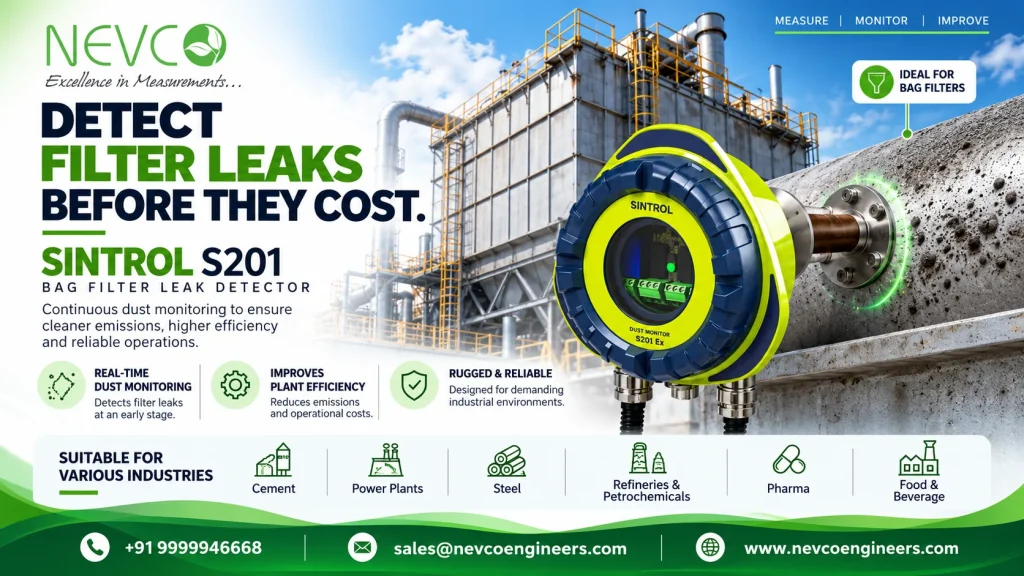
Introducing the SINTROl S201 Bag Filter Leak Detector
The SINTROl S201 is designed to monitor dust levels across bag filter housings and identify potential leaks at an early stage. It provides continuous dust measurements, remote visibility, and alerting to keep your system running cleanly and efficiently.
- Continuous dust monitoring across multiple zones
- Early detection of potential filter leaks to prevent performance declines
- Robust performance in demanding industrial environments
- Seamless integration with standard control systems and dashboards
How it works in practice
Leak detectors like the S201 are typically installed at strategic points in the baghouse plenum or ductwork. They track dust concentrations, compare against baseline levels, and trigger alarms when readings indicate potential leakage. Operators can then inspect seals, replace worn bags, or adjust cleaning cycles as needed.
Key features to look for in a detector
- Real-time dust monitoring with fast response times
- Alarm thresholds aligned with regulatory and process targets
- Rugged design for high temperatures, dust, humidity, and vibration
- Remote data access and easy integration with PLC/SCADA systems
ROI and operational impact
Investing in leak detection pays off through several channels. By catching leaks early, you protect emissions compliance, reduce energy waste, and extend filter life. A simple ROI framework can help you justify the investment.
- Energy savings from stabilized collection performance and reduced recleaning
- Lower maintenance costs due to fewer unplanned bag changes
- Fewer emissions penalties and better regulatory alignment
- Quicker return on investment through improved uptime and throughput
Example ROI outline: Suppose a plant experiences occasional leaks that increase energy use by 3 percent and raise maintenance costs by 5 percent per year. If a leak detector costs X dollars and reduces leaks by 80 percent, the annual savings from energy and maintenance could exceed the detector’s cost within Y months. Exact figures depend on plant size, duty cycle, and local regulations.
Implementation best practices
- Conduct a quick site survey to map high risk zones where leaks are most likely
- Select detector locations based on duct layout, baghouse sections, and airflow patterns
- Define clear alarm thresholds tied to regulatory limits and process targets
- Integrate with the plant’s control system for centralized monitoring and alarms
- Calibrate sensors regularly and train operators on interpretation and response
- Keep spare parts and a maintenance plan to minimize downtime
Reliability in harsh industrial environments
Detectors designed for dirty, hot, and vibration-prone environments use rugged housings, dust-tolerant sensors, and sealed enclosures. They are built to withstand long shifts, frequent starts and stops, and variable air streams common in baghouses.
Conclusion and takeaways
Detecting bag filter leaks before they cost you is a proactive strategy for cleaner emissions, steadier plant performance, and lower total cost of ownership. By combining continuous dust monitoring with a robust detector like the SINTROl S201, plants gain early visibility, better maintenance planning, and a clearer path to compliance and efficiency.