Nevco Engineers Pvt. Ltd. 90 A, 2nd Floor, Opposite Iskon Temple, Amritpuri, B Main Road, East Of Kailash, Delhi - 110065
Hot Line: +91-9999946668

AR 500 (OPSIS) Air Quality Monitoring System

OPSIS DOAS air quality monitoring

AR 500 (OPSIS): a multi-gas air quality monitoring system for industry, cities and streets

The AR 500 (OPSIS) is an open-path DOAS air quality monitoring system. It measures many gaseous pollutants, including SO₂, NO₂, O₃, benzene, CO and NH₃, continuously and without taking a sample of the air.

Nevco Engineers supplies the AR 500 in India for industrial sites, urban monitoring and street-level stations. More than 300 AQMS stations have been installed across the country with this system, and Nevco has served Indian industry for 44 years, since 1982.
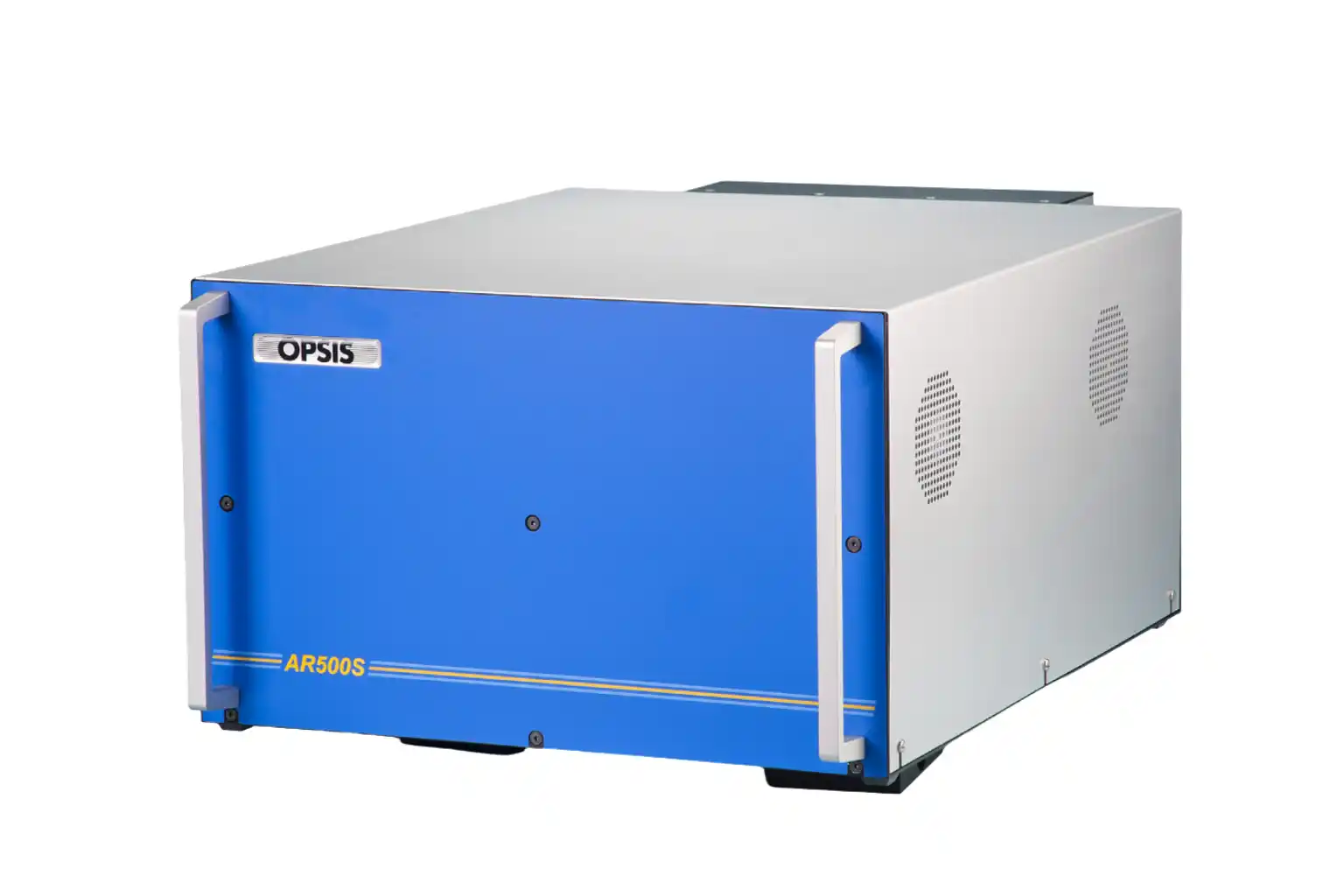
AR 500 OPSIS DOAS air quality monitoring system analyser
300+AQMS stations installed across India
2%certified span drift per year
95%data capture, with no moving parts
25 yrsoperational life, up to
1calibration needed per year
Overview

What is the AR 500 air quality monitoring system?

The AR 500 is an air quality monitoring system from OPSIS, built on Differential Optical Absorption Spectroscopy (DOAS). Each gas absorbs light at its own wavelengths. By reading how much light is absorbed, the analyser identifies each gas and measures how much of it is in the air.

Because the light travels through open air, the measurement is non-contact and non-sampling. Nothing is drawn into the instrument, and the system has no moving parts. The AR 500 holds a 95% data capture efficiency and needs only one calibration a year.

It is described as high-performance and cost-effective, and it is built for industrial environments, urban monitoring and street-level applications. Looking for the wider range? Nevco Engineers lists every model under air quality monitoring systems in India.

AR 500 (OPSIS) at a glance
TechnologyDOAS (Differential Optical Absorption Spectroscopy)
MeasurementNon-contact, non-sampling, remote sensing
PollutantsSO₂, NO₂, O₃, benzene, CO, NH₃, Hg, HF, HCl, Cl₂ and many more gases
Data capture95%, with no moving parts
StabilityCertified span drift of only 2% per year
CalibrationOne calibration a year
Operational lifeUp to 25 years
ReportingFully automatic report generation
PowerLow power consumption
UpgradesFuture upgradation support
ApprovalEPA approved technology
UseIndustrial, urban and street-level monitoring
Key monitoring parameters

Gases the AR 500 can measure

One AR 500 analyser monitors several gaseous pollutants at the same time, so a station does not need a separate analyser for every gas. The common parameters are listed below, and the system can measure many more gases.

SO₂Sulphur dioxide
NO₂Nitrogen dioxide
O₃Ozone
C₆H₆Benzene
COCarbon monoxide
NH₃Ammonia
HgMercury
HFHydrogen fluoride
HClHydrogen chloride
Cl₂Chlorine

The AR 500 measures gases. For particulate matter, use the OPSIS SM 200 for ambient dust monitoring of PM10 and PM2.5. The AR 500 can also identify hydrocarbons through its remote sensing capability.

How it works

How the AR 500 DOAS air quality monitor works

The AR 500 measures along a path of open air instead of at a single inlet. Five steps turn that light path into gas readings.

  1. Light crosses the open airA transceiver sends a light beam along the monitoring path to a retro-reflector.
  2. The beam returnsThe retro-reflector sends the light back to the transceiver.
  3. Fibre optic cable carries the signalThe returned light travels by fibre optic cable to the analyser.
  4. Gases leave a fingerprintEach gas on the path absorbs light at its own wavelengths, so the absorption shows which gases are present.
  5. The analyser reportsIt converts the absorption into concentrations for each gas and generates reports automatically.
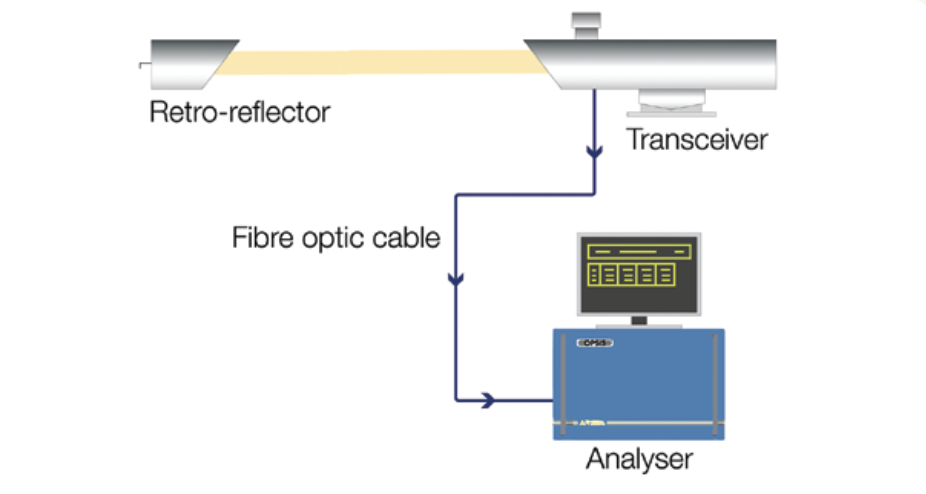
AR 500 DOAS layout: retro-reflector, transceiver, fibre optic cable and analyser
AR 500 layout: retro-reflector, transceiver, fibre optic cable and analyser
Key benefits

Why plants and cities choose the AR 500

The benefits below come from the way DOAS measures: along a light path, without sampling, and with no moving parts.

Stable readings

Certified span drift of only 2% per year keeps the data steady over time.

High data capture

95% data capture efficiency with no moving parts.

Non-contact, non-sampling

Gases are measured in the open air, so no sample is drawn into the instrument.

Long operational life

Built to run for up to 25 years.

Low upkeep

Only one calibration is required each year, and power consumption is low.

Automatic reports

Fully automatic report generation saves manual data handling.

Upgrade path

Future upgradation support lets a station grow with your needs.

Hydrocarbon identification

Remote sensing capability helps identify hydrocarbons.

Proven approach

EPA approved technology, trusted across India and worldwide.

Applications

Where the AR 500 air quality monitoring system is used

The AR 500 is made for three kinds of site. Pick the one that matches your monitoring goal.

Industrial environments

Track the air around plants and industrial areas with continuous multi-gas data for your own records and for regulators.

Best for: industries and plant environment teams

Urban monitoring

Stations that record gas levels in real time across a city, so authorities can follow air quality as it changes.

Best for: environmental agencies and city bodies

Street-level monitoring

Roadside and traffic locations where gas levels can change quickly through the day.

Best for: traffic and city air quality programmes
Technology comparison

AR 500 DOAS compared with point sampling analysers

Many monitoring stations use point sampling analysers, which draw air in at one inlet and measure it inside the instrument. The AR 500 measures along an open light path instead. These are typical differences, so check the specification of any analyser you compare.

If you must report only one gas at one fixed point, a point analyser may be enough. If you need several gases from one system with low upkeep, open-path DOAS is a strong fit.

FeatureAR 500 (DOAS)Point sampling
Where it measuresAlong an open light pathAt a single inlet
Air sampleNon-samplingAir is drawn in
Gases per analyserMany gases from one analyserUsually one analyser per gas
Moving partsNonePumps and valves are common
CalibrationOne a yearDepends on the analyser
Selection

Is the AR 500 right for your site?

Use this short check before you ask for a quote.

Choose the AR 500 when you need

  • Several gases from one air quality monitoring system
  • Low upkeep, with one calibration a year
  • A long service life of up to 25 years
  • Monitoring for an industrial, urban or street-level site
  • Automatic report generation

Look at other Nevco systems when you need

Gallery

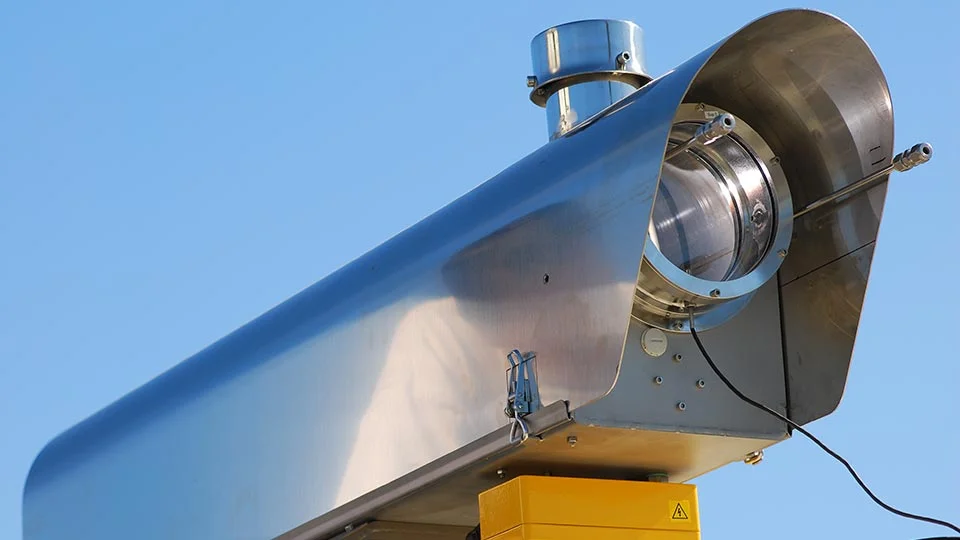
OPSIS air quality monitoring equipment
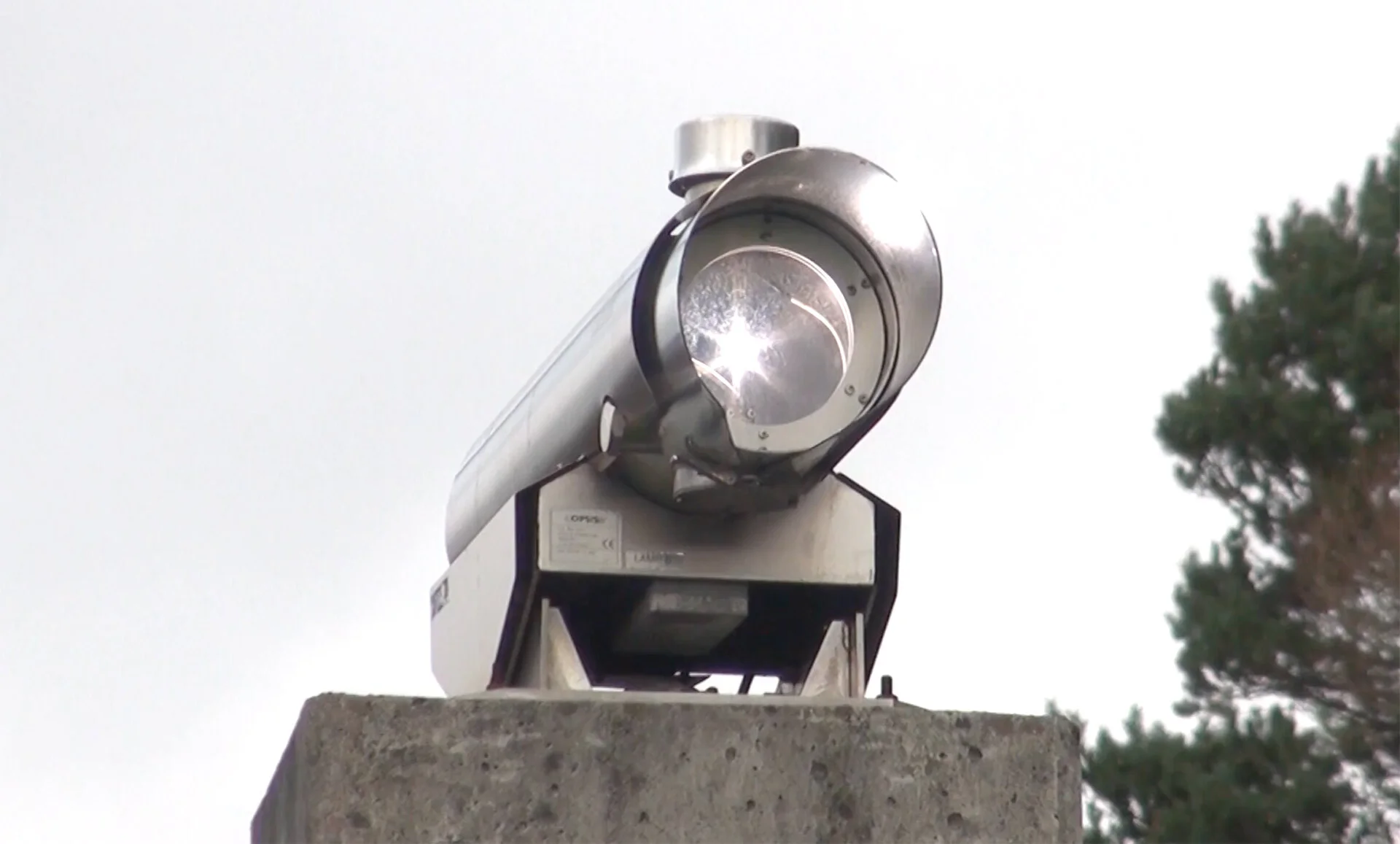
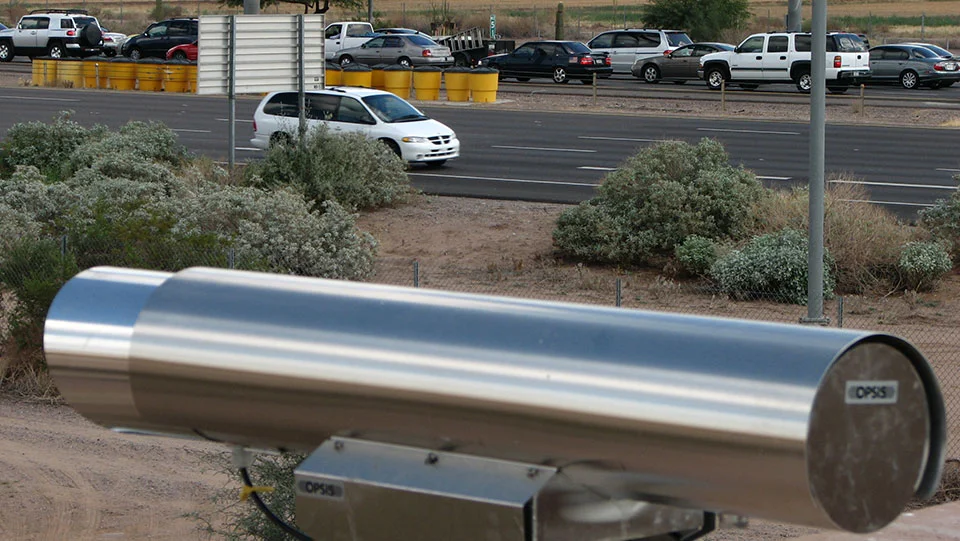
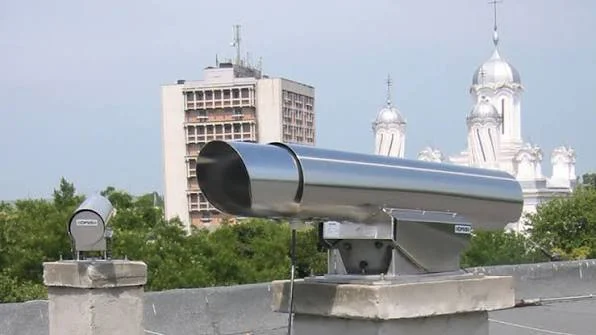
OPSIS air quality monitoring product range OPSIS emitter for air quality monitoring under open sky OPSIS street-level receiver for air quality monitoring OPSIS air quality monitoring equipment
FAQ

AR 500 air quality monitoring system: frequently asked questions

What is the AR 500 air quality monitoring system?

The AR 500 (OPSIS) is a high-performance, cost-effective air quality monitoring system built on DOAS technology. It measures many gaseous pollutants continuously, with minimal maintenance, for industrial, urban and street-level sites.

What technology does the AR 500 use?

It uses Differential Optical Absorption Spectroscopy (DOAS). A light beam crosses open air, each gas absorbs light at its own wavelengths, and the analyser turns that absorption into gas concentrations. The measurement is non-contact and non-sampling.

Which gases can the AR 500 measure?

It measures SO₂, NO₂, O₃, benzene, CO, NH₃, Hg, HF, HCl and Cl₂, and many more gases. It can also identify hydrocarbons through remote sensing.

How stable is the AR 500?

It has a certified span drift of only 2% per year and a 95% data capture efficiency, with no moving parts.

How often does the AR 500 need calibration?

Only one calibration is required each year.

How long does an AR 500 last?

The operational life is up to 25 years, and future upgradation support is available.

Can the AR 500 be used for city and roadside air quality monitoring?

Yes. It is designed for industrial environments, urban monitoring and street-level applications.

How many AR 500 air quality monitoring stations are installed in India?

More than 300 AQMS stations have been installed across India with the AR 500, for industries and environmental agencies.

Does the AR 500 measure dust, PM10 or PM2.5?

No. The AR 500 measures gaseous pollutants. For PM10 and PM2.5, Nevco Engineers offers the OPSIS SM 200 for ambient dust monitoring.

How do I get a quote for the AR 500 in India?

Send your site details and the gases you must report through the quote form below, call +91-9999946668 or write to sales@nevcoengineers.com. Our engineers will recommend a configuration.

Request a quote

Plan an air quality monitoring station with Nevco Engineers

Tell us your site, the gases you must report and your reporting needs. Our engineers will recommend an AR 500 configuration.

+91-9999946668sales@nevcoengineers.comMonday to Saturday, 10:00 AM to 6:00 PM