Introduction: Setting the Stage for a Cleaner, More Efficient Future
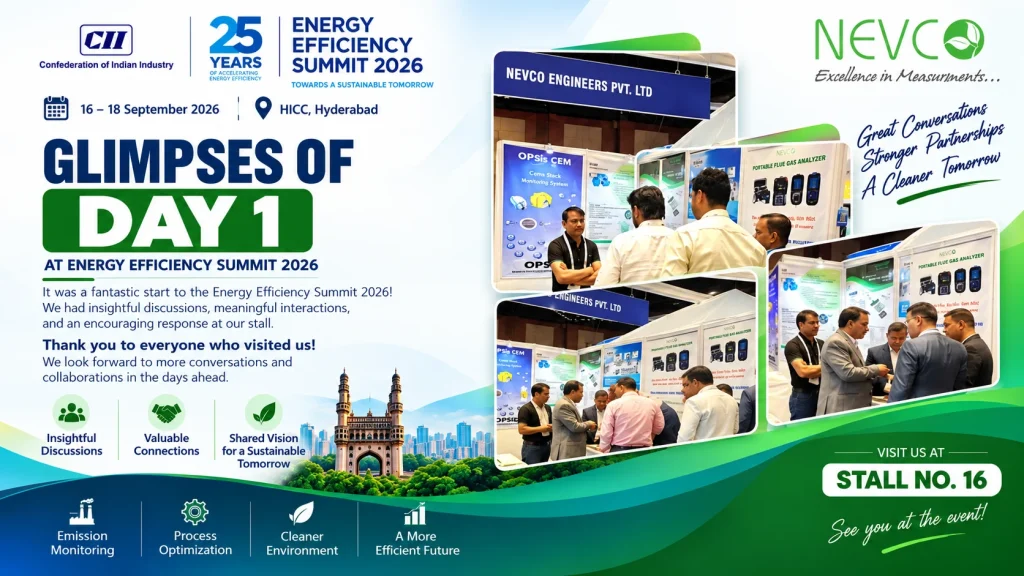
The Energy Efficiency Summit 2026 brought together engineers, policymakers, and industry leaders with a shared goal: translate cutting-edge science into practical, scalable solutions. Day 1 in Hyderabad underscored the power of collaboration and real-world impact. At the NEVCO Engineers booth, attendees explored how emission monitoring, process optimization, ambient air quality monitoring, and energy-efficient industrial solutions can drive substantial gains in productivity while reducing environmental footprints. The event runs from September 16–18 at HICC, and Day 1 set an ambitious tone for the days to come.
Key Themes on Day 1: Turning Insights into Action
Emission monitoring: turning data into decisive action
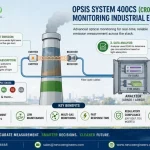
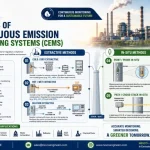
Accurate emissions data is the foundation for compliance, process improvement, and stakeholder trust. Day 1 highlighted the shift from manual reporting to continuous monitoring and analytics that provide real-time visibility across plants. Practical takeaways included the integration of Continuous Emission Monitoring Systems (CEMS) with ERP and maintenance platforms, enabling predictive maintenance and faster troubleshooting. Attendees learned how real-time dashboards can flag anomalies, support regulatory reporting, and drive immediate adjustments to operations that reduce pollutants and fuel burn.
- Implement CEMS with automated alerting and autonomous reporting to regulators.
- Correlate emission spikes with production runs to pinpoint root causes.
- Use predictive maintenance to minimize unscheduled shutdowns and emissions-related downtime.
Process optimization: analytics fueling smarter plants
Process optimization emerged as a cornerstone of sustainable throughput. Sessions showcased energy analytics, pinch analysis, and digital twins that model plant behavior under varying load conditions. Practitioners walked away with actionable steps: map energy flows, identify low-hanging efficiency wins (such as heat-recovery opportunities), and deploy smart controls that automatically adjust cooling, heating, and air-handling systems. The emphasis was on turning data into decisions that reduce energy intensity without sacrificing throughput or product quality.
- Conduct energy balance and pinch analysis to locate waste heat opportunities.
- Deploy digital twins to simulate changes before implementation.
- Integrate SCADA with AI-driven optimization for continuous gains.
Ambient air quality monitoring: safeguarding people and equipment
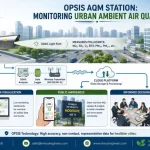
Ambient air quality monitoring was framed not only as regulatory compliance but as a strategic safety and maintenance tool. Continuous monitoring of workplace and surrounding air helps protect workers, preserve equipment life, and inform ventilation strategies. Attendees explored portable and fixed monitoring solutions, data fusion across sensors, and how ambient data informs cleaning, filtration, and maintenance scheduling. The consensus: better air quality data leads to better decisions, better compliance, and better long-term performance.
- Install multi-point monitoring to capture spatial variations in air quality.
- Link ambient data with filtration and HVAC controls for adaptive ventilation.
- Use historical trends to plan maintenance and reduce contaminant-related wear.
Energy-efficient industrial solutions: practical paths to performance
Equipping facilities with energy-efficient components—such as high-efficiency motors, variable frequency drives (VFDs), and advanced heat-recovery systems—was a recurring theme. Beyond hardware, the conversations highlighted how energy audits, procurement strategies, and digital adoption (IIoT, remote monitoring, and analytics) can compound savings. The focus was on scalable, reproducible solutions that deliver reliable ROIs while maintaining product quality and throughput.
- Prioritize high-efficiency motors and VFDs for motion-heavy processes.
- Implement heat-recovery loops and waste-heat-to-power opportunities.
- Adopt a phased digital transformation plan to realize steady, verifiable savings.
Exhibiting Effectively: How to Get Value from a Trade Show
Day 1 also offered practical lessons for attendees and exhibitors about maximizing expo ROI. Clear objectives, live demonstrations, and easy access to metrics-backed case studies helped attendees see what works in practice. For organizations presenting at such events, the playbook includes designing interactive demos, providing tangible takeaways (calculators, checklists, dashboards), and ensuring robust post-event follow-up to convert conversations into collaborations.
- Set concrete goals: qualified leads, partnerships, or pilot opportunities.
- Offer live demonstrations of dashboards and control systems to illustrate value in real time.
- Capture contact data with consent and deliver timely follow-ups with personalized next steps.
Spotlight on NEVCO Engineers: Stall No. 16, An Hub of Insights
NEVCO Engineers hosted meaningful interactions at Stall No. 16, turning conversations into pathways for cleaner operations. Visitors explored demonstrations around emission monitoring, process optimization, ambient air quality, and energy-efficient industrial solutions. The booth served as a micro-lab: attendees could see how integrated monitoring systems translate to faster decision-making, lower emissions, and improved energy performance. The engagement underscored a simple truth: practical, field-ready solutions can coexist with rigorous data and thoughtful design to unlock measurable results.
- Live dashboards illustrating real-time emissions and energy consumption.
- Case studies showing measurable reductions in fuel use and pollutant outputs.
- Guidance on starting a pilot project within existing facilities to validate benefits.
Looking Ahead: Day 2 and Beyond
With Day 1 laying a strong foundation, Day 2 and 3 are expected to deepen the dialogue around standards, innovative technologies, and scalable implementation. Attendees can anticipate more sessions on regulatory frameworks, AI-driven optimization, and funding pathways for energy-efficiency projects. For those who visited Stall No. 16, the momentum continues with follow-up meetings, technical workshops, and opportunities to co-create pilots that demonstrate real-world impact in their facilities.
Conclusion: Toward a Cleaner, More Efficient Future
Day 1 of the Energy Efficiency Summit 2026 delivered practical guidance, valuable connections, and a clear path to impact. By leveraging emission monitoring, process optimization, ambient air quality insights, and energy-efficient solutions, industries can advance toward sustainable growth without compromising performance. Whether you’re a plant manager, an engineer, or a policy advocate, the conversations from Day 1 highlight a shared commitment: collaborate, innovate, and implement for a cleaner, more efficient future.